I wasn’t sure which direction to go, but today I decided I have to talk about the E word. Yes, EXERCISE. That word and verb we as a nation seem to be so good at avoiding. Well, I am sure you have figured out by now that blood flow and good BGs are good for T1Ds so with that you probably figured out exercise it excellent for us too. You are right! Anytime I can keep blood moving means that my body will work better… well kind of. So exercise is extremely essential for being a T1D. I have had my Endocrinologist tell me more than once that one of the reasons I don’t have any complications yet is because I exercise. For those of you that don’t know I am a Spinning instructor, group fitness instructor, and love to ride my bicycle. I really LOVE to ride my bicycle. Let’s go back to my Endo’s words and really think about it… I don’t have any complications YET partly because I exercise, this is a huge and yet very heavy statement. Yay, for me working my butt off, but sadly complications are a very real thing. You see when you have T1D every time your BG is over 250 it is causing organ, tissue, vein, artery, and over all damage. So, overtime your body can only handle so much. My Endo also told me the only reason why I still have an ankle reflex is because I exercise. He went on to explain that most adults with T1D loose their ankle reflex after 5 years. Diabetic complications are a very real and very serious thing. I will get into depth about complications on a later day, because my friends, it is going to take up some time. So, I exercise, and I mean 5-6 times a week. What is the big deal? Well when you have T1D anytime your heart rate goes up, your BG goes down. Sometimes a little, sometimes it drops a ton… sometimes it goes up?!?!? Sometimes my BG does whatever the hell it wants. BG levels and exercise get complicated. So when my heart rate goes up, my BG goes down. If I am pushing hard, say running, it drops fast, so fast; I end up eating so many carbs I feel like a sugar baby. If my heart rises a little and then maintains, my BG drops slower over a period of time, like when I ride my bicycle or swim. Think about it this way, sure your heart rate goes up when you are swimming or biking, but they are more of an endurance event, unless your are sprinting of course. Weight lifting is also something that doesn’t cause my BG to drop much… because unless I am doing squats or lunges my heart rate isn’t rising much. BUT exercise, any kind can make my BG drop up to 48 HOURS after I exercise. Also if I am under any kind of stress, say I am fighting off some sort of cold crud and don’t have any symptoms yet, my BG can shoot up after exercise and then bottom out 2-3 time the next day. Or let’s say I go on a long bike ride with a lot of hills… you know the ones I am talking about, and it is muddy, so I am using more muscle, this can all cause my BG to rise because of my body needing more glucose, so my liver delivers on that need, and then I don’t have enough insulin in my system to make up for the extra glucose. Also, if my muscles are sore from working out, my BG goes up, because of the lactic acid. Then there are the times I get ready to go out for a ride, walk, or swim and then I get going and my BG drops continuously and won’t come up.. so then I have to stop and call it a day. Or if I have plans to do something and my BG is too high because high BG and exercise together can cause the beginning of DKA if you don’t have adequate insulin for some reason. EXAUSTING right? Please note, I do have most of my exercise somewhat figured out and I eat a certain number of faster acting carbs before I work out to compensate for the activity I am doing. So if you see me eating “gels” that is what I am doing. This works for me, it doesn’t work for everyone else. That is the whole thing, what I have figured out that works for me doesn’t necessarily work for other T1Ds. I know what you are thinking, why even bother with all this? Because exercising is something I CAN do, because I want to live a quality life, because I want to live. Just because I have T1D doesn’t mean I can’t do things, there are Ironmen, Ironwomen, Olympic swimmers, and many more athletes with T1D. It just means as T1Ds we have to work a bit harder.
Day 11-
To laugh, to joke, to giggle… They say laughter is the best medicine and I truly believe this is true. So today I am going to talk about humor. As you have been reading these you are realizing how dire, serious, and exhausting T1D can be, and we haven’t even gotten to the worst parts yet and I haven’t even been including all of it, you all have been getting the shortened versions. Yes, really. One of the ways we cope is making jokes about our situations.. for instance I have a coffee mug that says, “I run on coffee and insulin” I also have a shirt that says “I shoot up to avoid getting high”, I think these are hilarious, and it is totally true. I know it might make some that are unfamiliar with T1D uncomfortable, but if we are laughing you are totally allowed to laugh. See this is our reality 24/7 so to survive mentally we with T1D have to be able to make light of this horrible suck-ass disease, because this disease makes life so real all the time. So our humor might be a little dark, but so is this disease. This concept applies to anyone with a serious disease, if they are joking about it, listen and laugh with them. We need it sometimes and we need the support, because it can be very, very lonely. Now, I want you to understand that jokes ABOUT diabetes that may be on, let’s say, SNL are NOT FUNNY. Not only are they usually TOTALLY INACCURATE, they hurt. Remember there are people of all ages with T1D, babies, kids, pre teens, teens, young adults, adults, seniors, and we are all tired of the jokes. Well maybe not the babies, but if they understood they would be. Recently Jimmy Kimmel joked about donuts received from Kelli Ripa giving him diabetes. I am pretty good-natured about stuff, but dude, really. It is a stupid joke and he is supposed to be smarter than that, I mean he should be able to think of something funnier. So I challenged him to be a T1D for a day. Wear a pump, (they can be filled with saline), count carbs, check your BG, and I don’t think he would make it. Yes, I really did challenge him. The point is, as a culture generally we don’t make fun of those with a disability. You don’t hear someone making fun of a quadriplegic, because that is seriously wrong and horrible. Just because T1Ds look like we are health and OK doesn’t mean you can make fun of us. Yes, I totally understand most of the time they mean to poke fun at T2D and that commercial where the guy is saying “Diiiiabeetus” is horrible and slightly funny in a wrong way, but it doesn’t make it ok for celebrities to make fun of either T1D or T2D, Both diseases are hard folks and news flash, both can kill you. So, a refresher, a T1D joking about their daily struggle, it is ok to laugh. A celebrity making inaccurate jokes about the disease, NOT OK.
Day 10-
So today I am going to talk about new and emerging medical devices. I am only going to talk about medical devices and will talk about research and new medical treatments another day. So there are some really amazing new things happening in the world of T1D, and it is all going to happen within the next 3 years… well hopefully… they say it is going to. The problem with new drugs and devices is the very rigorous, expensive, and time consuming trials and human trials. For a new drug/device to get to the human trial takes YEARS of research and reports to back up the research and then the company has to hope they are granted permission to conduct a human trial. This costs millions of dollars, yes millions, and unfortunately a lot of amazing new devices and technologies never make it that far, or if they do they run out of funding. There is an amazing new documentary coming out soon called “The Human Trial” and it is about a company called Viacyte and the “pod” like device that is surgically planted into the T1D patient so it can deliver stem-cell derived Islet cells to the patient… yes the very islet cells that produce insulin and since they are stem cells, (stem cells are very smart), they don’t have the same cellular background as beta cells (where islet cells are made), so the autoimmune disease doesn’t kill these new islet cells. This is huuuuugggeee, but is also not perfect. The inserted pod does have a live span and will need to be replaced. This whole endeavor is very interesting and I highly recommend checking out “the Human Trial”. Even though it isn’t finished yet, the documentary gives great insight on how long and hard the whole trial process is. Just a FYI all the trial applications and processes are regulated by the FDA. Also a lot of the trials that lead up to the human trials, where they start all the research, starts with animals, mostly mice with T1D. I know this isn’t a pretty fact, but it is a fact. If you are interested in learning more about the documentary “The Human Trial” check it out! https://thehumantrial.com
Ok, so the other day when I was explaining insulin pumps and CGMs I know a lot of you were thinking, so the CGM doesn’t talk to the pump and then the pump makes adjustments according to the BG reading? Yes, you would think that would totally exist, and it now does. This is called the artificial pancreas and Medtronic won the race to the finish. There were about 3 other companies working on one. One was Animas and they lost either funding, or pump reprogramming wasn’t working because they just announced they are closing down for good. Gone, and this is the pump I have… so yeah. So the Medtronic Artificial Pancreas will be out this winter early next year. It works with their sensor and will suspend when your BG reads really low… Manual meal boluses are still required with this model. This is huuuugggee too! There is a waiting list already.
Next is an interesting venture. It started with a man whose wife and son had T1D. He was in finance and automated stock trading he used what he knew about algorithms and insulin/carb ratio to create models for blood sugar trends. Then he high-jacked his wife’s pump and reprogrammed it to speak to the CGM. This new unit works as an artificial pancreas of sorts. The difference is he took two existing devices and just made them communicate to each other and have the pump make dosage changes according to the algorithm. This is amazing! So, he got a team together to create Bigfoot Biomedical and wanted to get the coding and algorithm out there, but because it is a medical device that delivers medication AND will regulate BG then they have to go through the trial/human trial process. Bigfoot also had to create their own insulin pump, since if you mess with your existing pump it voids the warranty, which is something you really need on a life saving device. They are looking to come out with their product in 2020.
It was just announced this week in Europe they have approved a 180 day CGM, which is amazing. Right now the longest the FDA has approved a CGM is 7 days. There are a lot of questions with this new one…such as cost, size, as in transmitter size and actual filament size. So I will keep you up to date as I know more.
Lastly there is a new CGM coming to the market called the Freestyle Libre. This CGM is a bit different because it uses a “watch” style receiver that reads when waved over the transmitter on the body. This one sounds good but is missing both the high BG and low BG alarms which are an essential part of why most T1Ds wear a CGM.
There are other devices coming out too but these are the most exciting ones. It sounds like things are a moving and a grooving right? Well we with T1D have been hearing about these for YEARS… really years.. this is how long the process takes. Also,
a lot of times after something new like this is released they make quite a few changes, tweaks here and there throughout the next year because the products are actually being used and they are getting feed back on what works and what needs to be changed. Also the price is higher when they first come out, they need to recoup some of that money they had to spend throughout the trial process and after 1-2 years the price usually drops. So we are moving forward in the T1D technology world… but not as fast as you would think. The moral of the story is nothing, nothing works as well as our bodies, even the most advanced technology.
Day 9-
Money, dinero, argent, I soldi, makes the world go ‘round. Also it is helps diabetics stay alive. I am going to get right at it; T1D is an exorbitantly expensive disease. Ok, where to start. These are out of pocket costs without insurance. Test strips, ok say you don’t have a CGM and you have to check 8-10 times a day, and that if your insurance will allow that many because many don’t, are around $60-75 per box of 50, yes that lasts 5 days. You can’t get less expensive test strips but they are just coming out with reliability reports on test strips. You pretty much get what you pay for with those. Remember as a T1D you need these to check your BG, which is entirely necessary. Insulin, short acting, is now $331 A BOTTLE, I use 2 ½ bottles a month, which means I buy 3 month. When I was diagnosed close to 15 years ago it was $50 a bottle.. it is the same insulin.. I can’t jump higher or run faster, it works just the same. This is the same price gouging that happened with the Epi Pen, the only difference it has been happening for YEARS and congress or anyone has yet to do shit about it. There is a class action suite that is has begun against the largest insulin producers, but that doesn’t solve the problem. Insulin is a more expensive drug to make, but a live saving drug should not be so expensive that people are dying because they can’t afford it. Yes, this is actually happening in a 1st world country. Insulin is over 100 years old… it is not new. There isn’t any generic insulin because the patent is still owned by the first companies. One of the patents was up last year but the company extended it. For a generic to be made the initial patent on the drug has to expire and then that enables other companies to create a similar drug. Although I do know someone that has worked in the field and they felt that a patent might not happen for a while if it was a possibility due to the cost and process of creating insulin. Wal-Mart claims they have a “generic” insulin but it really isn’t and it doesn’t work as well for a lot of T1D and also it does not work well in insulin pumps. So long lasting insulin usually is a bit more expensive than short acting, I don’t quite know the price because I don’t use it. Maybe another T1D can help me with that?
Pump supplies- I receive a box for a 3-month supply 4 times a year. In it are
Infusion sets- $760 for 3 months or $16 each
Reservoirs- $359 for 3 months or $7.80 each
Test strips- $659 for 3 months or $60 a box, if I buy the same box at Walgreens they are $75
IV prep pads- which are like alcohol pads with sticky stuff and essential for the infusion set to stick $11 for 45 pads.
Also please note they only give you the exact number you need so if your pump site pulls out, leaks, or has some sort of malfunction you are SOL and have to call the pump company and spend no less than 30 minutes on the phone to prove you are not an idiot and yes their equipment malfunctioned so they can send you 1 replacement… awesomeness! CGMs are very expensive. The transmitter, which you need is $800 and they are only warrantied for 6 months so you need 2 a year, and the receiver which is also necessary, is $500 and again you need 2 a year… although I use my much longer. Some sensors you can use a phone app as the receivers but it does not read as well because your phone isn’t always within transmitting distance. Now these prices are for Dexcom, which is what I have, but other sensors are pretty comparable because these companies are a bit competitive. The actual sensors are $2,250 for 3 months or $187.50 each, and now you know why we wear them for more than the approved 7 days. Yes, usually if you are wearing a CGM you are using less test strips but you still need test strips. So my box of supplies for 3 months, this includes my test strips, is $4,850.
Every year a T1D also has to buy a new Glucagon kit, these are glucose shots that can be used to revive you if your BG is so low you loose consciousness or if you are alone and you need it as a last resort to not pass out. These are $339.26 each. T1Ds also have to go to a specialist Dr. called an Endocrinologist every 3 months and these office visits are around $150 and now they are charging $75 to look at your CGM data, which is nicely printed out, to use it as a tool to make pump adjustments. This price includes checking your A1c, your 3 month average BG. And about every 6 months you may need labs too. So grand total for a year
Insulin- $11,932.80
Pump supplies including CGM sensors and test strips- $19,400
Sensor transmitter and receiver- $2,600
Glucagon kit- $339.26
Endo visits- $900
So the grand total if you were uninsured would be $35,172.06
This is a CONSERVATIVE estimate because I rounded the numbers down and it doesn’t include labs, lancets, glucose meters, alcohol pads, the food you need to treat your low BG, the food you need to eat so you can exercise, or potential hospitalizations. Also, if a T1D is just on shots they will be paying more for insulin because many use insulin pens, which cost more, the 2 different insulins, and they also have to buy syringes. OH, also insulin pumps cost around $7000 and you only get a new one every 4 years. BOOM.
If you are interested, here is a petition to bring down the price of insulin. make insulin affordable
I have pretty good insurance; I am self-insured and have to pay 20% co-pay so for instance insulin is $100 a month. Yes it is still a lot but not full price. I used to be under-insured and payed for prescriptions and Dr. visits out of pocket. Fortunately, my pump supplies were paid by a mandate we are very very lucky to have in MI, which is if you are underinsured your insurance has to pay for 100% of your diabetic supplies after you meet your deductible. The rule has changed a bit since the affordable care act. Every year I have to add up how much I pay out of pocket and for insurance and make sure I don’t need to change to a high deductible lower max-out, less coverage plan. Yes are assistance programs for insulin but they are becoming less and less and recently even my Endo office posted they will not longer be able to give out insulin samples due to stricter hospital regulations. T1Ds are all ages, from babies to seniors same costs across the board and Medicare is finally getting on the CGM boat, even though it has proven for better control and less diabetic complications if used properly and continuously. This is a disease we didn’t choose, that we need a drug to stay alive. Are you outraged yet? You should be, I am.
Day 8-
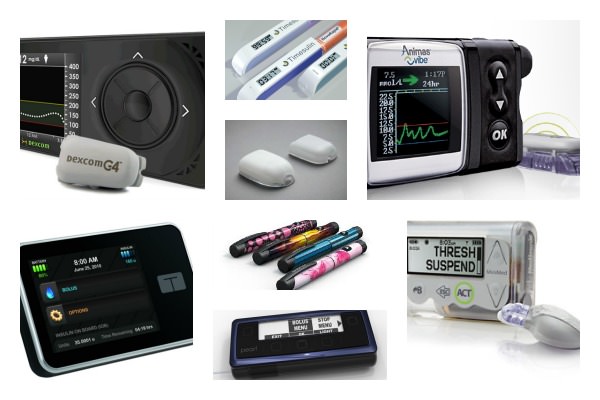
Today I am going to veer off a little and talk about Technology in the way of medical devices for T1D. I am only going to talk about medical advances that we as a T1D community use everyday to manage our T1D. I will talk about medical advancements for a T1D “cure” and I use that term very loosely because as of right now there is absolutely not a cure, another day. So first and foremost we have the glucose meter. Now every T1D uses a glucose meter because it measures the amount of glucose in our blood stream in the measurement of mg/ DL, or milligrams per deciliter. Also just a refresher to check our BG we have to poke our fingers to get a blood drop that is then administered to a small strip called a test strip. Our glucose meters are near and dear to our hearts as we need them everyday to survive. Fun little fact, did you know most test strips use a small amount of gold in them because of the conductivity of the gold and it’s malleability properties? Gold is the softest yet a very dense metal so it can be milled very very thin. Each strip has at least one tiny circuit in them and some up to 4, but sadly there isn’t enough gold to recover from the strips.. believe me people have been trying! Next let’s touch base on the insulin pump. I have mentioned pumps in the past, so a refresher, a pump is a device that holds insulin and administers a quarter of an hourly dose every 15 minutes. These hourly rates are called basal rates and they are used to control your BG through out the day not including when you eat. Throughout the day your insulin levels fluctuates adjusting to your hormone levels, most people have higher levels in the morning, your activity level, your stress level, environment and weather, sugars in your body, and many more things. Also your liver is releasing more or less sugars in reaction to all these factors and the insulin levels. So you see they work off of each other and create a very delicate balance… and you never even know. One thing that T1D taught me is to be in absolute awe of how amazing our bodies are and how they work. So if you don’t produce any insulin on your own, you have to look at BG patterns through out the day and come up with different basal rates, most pumps can program at least 10 different rates through out the day… this is a lot of programming and when you get a pump for the first time it can take up to a month to get all the correct numbers and factors programmed into your pump, and it is ALWAYS changing. I am always tweaking my pump; it is never ending because our bodies are always changing. Another insulin rate you program in is the bolus rate, which again, is the insulin you give yourself for meals. Throughout the day a T1D might have 3-4 different ratios of how many units of insulin they administer for a certain number of carbs, for instance, at noon it might be 1 unit for every 8 carbs. This is why folk it is VERY important we T1D count our carbs very carefully. Pumps also include how much insulin you have “on board”, say you had to give yourself a dose of insulin because your BG was high, it keeps that info for a set number of hours, you program that in too, and if you eat a meal it used that factor when suggesting a dose for your meal. Also you program a BG number you want to be your goal, say 85 or a range 80-100 and if it is above that range it suggests the dose on how many points above that range, which can change throughout the day and you have to program in. Is your head spinning yet? Also you can program both a MAX basal and bolus rate so if you accidentally push too many buttons on your pump it can’t go crazy and give you all your insulin. The most fantastic things about pumps is you can give yourself a either decreased or increases basal rate for a certain amount of time if you are planning on a certain activity… say you are going to be moving all day, you can have your pump give you 20% less insulin for a certain number of hours and also, YOU CAN SUSPEND YOUR PUMP. Why is this so important? Say you are having repeated episodes of low BG and you are alone. Suspending your pump will temporarily stop the delivery of insulin and sometimes this is what you have to do.
There are few different types of pumps. These pumps are a rectangle device that contain a reservoir, that holds the insulin, and the reservoir direct feeds into the tubing that goes to an infusion site on the body. The infusion site is inserted with an IV like system whereas you use a needle to insert the tubing and pull the needle out and a tiny tube, cannula, stays in the body. Pump sites can only be left in for 2-3 days because it in a insertion site where a fluid is being pushed into your body and if left too long your body starts to reject the infusion site and you can get an infection. There in another pump that is similar the only difference is that instead of a direct feed from the reservoir there is a piston style delivery system that only pushes so much insulin into the line at once. This is a great invention because one of the malfunctions of a pump is to push the WHOLE reservoir out at once and as you can imagine that would be a very horrible day. The last type of pump is a pod like Pump and is actually called the Pod. Pods are stuck to your body as a whole unit, they are waterproof, and as of recently there was only one other water proof pump which seems ridiculous because we as humans are waterproof and when a normal person goes swimming they don’t take out their pancreas out and stick it on the side of the pool. Pods are programmed and directed by a remote (other pumps have buttons or touch screens on them). Pods can be great but also are a bit cumbersome and can be knocked off, like a lot. There are issues with tubed pumps too such as site leakage and you can catch the tubing on a doorknob, or cabinet handle and it can also be ripped out. So pumps are great, but not perfect. I know T1Ds that use shots and ones that have pumps, I also have T1D friends that have used pumps for a number of years and then switched to pumps. Lastly I am going to talk about the Continuous Glucose Monitors, or CGM. A CGM is a device that continuously checks your BG every 5 minutes via transmitter, which then sends it to a receiver where you can see the info. The transmitter is inserted IV style again only the transmitter filament is inside the needle and then the needle is removed and the filament stays in the body. These needles are quite large since the filament is in the needle. The transmitters can stay in the body for a long period of time since it is not injecting anything into the body. The FDA has approved them to be left in for 7 days but most T1D get them to work for 10-14 days before they stop reading. CGMs are invaluable because of that constant BG reading. I actually mount mine right to my bicycle on the handle bars, in a waterproof cell phone case, when I go for ride because all I have to do to check my BG is push button. The CGM does require you to “calibrate” it at least 4 times a day with a finger prick BG reading to make sure it is on the right course. Also it has a 30% variance, which is perfectly fine in the middle range of BG but can be a huge pain on the low or high end. Say your CGM reads 100 but your BG is really 60 or your CGM read 250 but your BG is 300… you can see where this system isn’t perfect. Also you can have your CGM give alarms when your BG is high and low which is fantastic until you are kept all night because your CGM says your BG is low and it isn’t… at all… and you don’t sleep. So CGMs are fantastic and I wear mine almost constantly, but they aren’t perfect. Tomorrow we are going to talk MONEY! This folks gets very, very interesting.
Day 7-
The Carbohydrate… say it with me car-bo-hydrate. That little building block of energy that is necessary to survive. The fuel we need to live and function everyday starts with carbs and ends with carbs. Sure we need protein, fat, fiber… yes fiber is a good thing, but with out carbs our bodies can’t produce energy, without carbs we die. When carbs are digested by our bodies they are converted into glucose, which is then used by our bodies for energy. As I mentioned earlier if your body has an overabundance of glucose it stores it in your liver and muscle to use later when it is needed. How does your amazing body break carbohydrates down into the awesome fuel called glucose? So how a normal body works is you eat food, digestion begins actually in the mouth as you are chewing, then it travels to your stomach and the carbs are broken down by an enzyme called amylase, after that the glucose travels to your blood streams, your pancreas produces the right amount of insulin to break the glucose down, it uses what glucose it needs, and stores the rest, and live moves on. Great right? So if you have T1D you make a meal, before you eat you poke your finger and check your BG, then you have to count how many carbs you are eating in the meal…. ALL of them, then if you are on shots you have a sliding scale that tells you what insulin dose to use including your BG number, how many carbs (we call this the insulin to carb ratio), and sometimes the I:carbs ratio is different depending on the time of day. Also if you just gave yourself insulin for a BG correction less than 4 hours ago you may have to include that in your calculation…. And now your food is cold and you are super hungry right? For T1D that have pumps we do all this but there are already about 4 factors programmed into the pump that when you add in your BG the pump suggests a dose. Pumps can really fine tune things, but they are a ton of work to get started because there are about 20 different settings you have to get all figured out and that takes weeks. But that is another topic for another day. So counting carbs… yes there are different carbs but for T1Ds we have to count all carbs the same… a carb is a carb is a carb is a carb. I would gladly give up eating any sweet food if that meant I could eat fruit or an apple whenever I wanted but I can’t because a carb is a carb. So we count carbs… we memories carbs… we know exactly how many carbs are in an apple, a piece of white bread, a piece of wheat bread, a banana, a large banana (yes there is a difference), chocolate, pasta, everything. You may be wondering if simple carbs and complex carbs digest the same, that answer is no for a normal person, but kind of for a T1D. See a simple carb may digest a bit faster and might not last as long, but you still need the same amount of insulin for simple and complex carbs. Fat and protein actually effect digestion more because high fat or protein meals can slow your digestion wayyyy down.. fat more than protein. Have you ever wondered why when you eat really greasy pizza you feel it for half of a day… it is because you are literally digesting it for hours. When you have T1D and your insulin peaked at 2 hours when you eat that greasy pizza your BG will continue to rise for 6 HOURS and you feel awful. Now down to the nitty gritty, how many carbs do T1Ds eat a day… well I am about to blow your mind… we can eat what ever we want! Yes, we can… but there is a trade off. When you have T1D the effects of food are amplified.. so if I eat crappy food I really feel like crap. Also I usually eat about 50 or less carbs per meal and 3 meals a day. Yes, that is 150 carbs a day. But remember if I have a low BG I have to treat it with carbs.. so most days it is a bit more than that. Also a little note, a lot of T1D eat on the lower side of carbs because the more carbs we eat the more insulin we use and even though we need insulin there are side effects to insulin such as weight gain and hunger. Yes insulin can make you hungry. Being super hungry on a very restricted diet is super fun, I will tell you what. Want to play a fun game? Count how many carbs a day you eat, I will bet you $5 it is over 300. You do however get to subtract the amount of fiber from the number of carbs if it is over 4grams. Fiber changes the digestion of the carbs. Also make sure when you count you are counting serving sizes… not just that hand full of chips you grabbed… how many chips are in a serving? Depending on the type of chips usually only 11, YES 11. Oh sad day right? So as a T1D I can eat whatever I want, but say a 1/2c of ice cream, yes I get to measure EVERYTHING, has 30 carbs, well so does 2 slices of home made sourdough bread (the small loafs), and I would totally rather eat a whole sandwich instead of a tiny bit of ice cream. I do have a lot of people ask me how I eat, but as you go along it does get easier and fortunately I love to cook. So there you have it, and this is the shorter abridged version of carbs.
Day 6-
So let’s take a little break, well kind of. I know all this info seems like a lot, because it is a lot, and there is even more… a lot more. So I wanted to talk about daily life with Diabetes and my outlook on life. I know this is all scary stuff… a lot of talk about death, but it is what it is. We T1D live with this everyday, it is our normal, yes a screwed up version of normal, but normal non-the less. We are strong because we don’t have a choice, well we do but it is not a very good or fair choice. Diabetes is a 24/7 job that is always changing and never EVER predictable. The day you think you have it all figured out is the day your BG bottoms out 5 times in 3 hours and you are so full of juice you feel like Violet from Willy Wonka. I have a lot of people say to me, “Well I could never give my self shots, I would just have to die” and well you would because if you don’t you will die, and really the shots are not the worst part. Please understand I am not telling you this because I want you to feel bad for me, this is just my reality, these are my fact of life. So that is why, if you know me at all, I choose to be happy… like all the time. This is something I CHOOSE to be, because even on bad days, I am alive, and that is a fantastic day in my book. For those of you that are close to me I do know that I can seriously annoy some people… yes I am aware of your thought of “how in the hell can she always be that cheery” but the truth of the matter is it totally a choice and yes sometimes I am faking it, and I just keep faking it until I am in that cheery frame of mind. Diabetes has soooo many uncontrollable factors, it is an exhausting disease, and my way of rebelling is to be happy, live the best damn life I can, wear bright colored clothing… yes I know how bright and how much I sometimes don’t match, to push myself harder and to always smile.. because those are all things simply diabetes can’t take from me. Also T1D has taught me that all that little shit in life just doesn’t matter…. It doesn’t. Life is wayyyy to short to waste or worry about what everyone else thinks. Life is here to have fun… it is really what you make of it. Is it all sunshine and rainbows all the time? Hell no, it is not, but if you look close enough there might be a rainbow in there somewhere if not, you can make your own rainbow. Yes I have bad days… I have extremely bad, bad days, yesterday for instance, my tube pulled out of my pump site while I was sleeping… this has only happened one other time, but I didn’t get insulin for 4+ hours, I actually don’t know how long exactly, and when I woke up from my sensor going off my BG was 415. That is high folks! I had to give myself a huge amount of insulin to bring my BG down and it took 5 hours. In those 5 hours I drank probably about a gallon of water, no joke, and felt like I got hit by a bus, plus my vision was screwed up all day. Then later in the day my BG was low 3 times, even though I was conservative with the corrective insulin dose I gave myself earlier. This is life with T1D, but the crazy thing is life just keeps going and the world keeps turning. So make the best of what you have, live life, smile, be kind, because life and kindness are a gift. Also now that you are beginning to understand some of the factors and facts of T1D don’t worry about us too much, please understand we have been dealing with all this the whole time, everyday, 24/7. The only difference is now you know and have a better understanding. The best things you can do are understand us and listen to us, or ask questions. Most T1D just want you to ASK ASK ASK if you have a question because that is the best way for us to share our lives with you, because just like everyone else we are just trying to make the best lives we can. Tomorrow The CARB.. that nasty and yet so necessary four-letter word.
Day 5-
Ok, so today we talk about Blood Glucose, aka blood sugar, or just plain BG. Your BG is the level of glucose in your blood…. yes blood. It is measured here in the US mg/Dl. So it gets complicated from the get-go. The standard of a normal BG reading differs from organization to organization. Some organizations say a FASTING BG should be 80-120, others claim 60-110 or 70-100, or, or, or. When you have T1D you use something called a glucose meter to check your BG 8-10 times a day by poking your finger with a tiny needle called a lancet. Yes, I said 8-10 times a day, sometimes it is actually more if you are having a bad BG day or it can be less, but is rarely less. I see you have added up how many holes you can create in your fingers within a week… up to 70… yup that is correct. That is why if I cut myself you bet I get my meter out and check my BG! So, back to the “normal range of fasting BG”. So one of the issues with this is every glucose meter has a range of accuracy. Two different meters can be within 30 points of each other. 30!!!!!!! There goes your whole range. Also every T1D is different. For me, as an example, if my BG is 80 that means it is going down, sinking, man overboard. Very, very rarely do I go up after an 85 or below reading. So if my BG says 70 then I have to treat it as a low BG and have to have some carbohydrates, like juice or I like to use Honey Stinger Gels. But I only have 20-25 carbs to treat it… not a ton or it will go up to much and then my BG will be high. Another problem with having BG on the lower side of normal say 60-80 is you develop something called hypoglycemic unawareness. This is where your BG can be low, very, very low, say 30 and you can’t feel it and you don’t have any symptoms and you can pass out and if no one is there to give you something called a glucagon shot to revive you, you die. Yes, if you become unconscious from low BG and you are not administered glucose in some way you die. Fun times right? Ok, so back to BG target range. After you eat every person’s BG rises as you digest your food. It is only supposed to go up so much, a T1D target range for 2 hours post meal is 150-170 max…. ha ha haaaaaaa they are HILARIOUS! In a perfect world that would work, but something I forgot to mention is EVERYTHING IN THE ENTIRE UNIVERSE AFFECTS YOUR BG if you have T1D… well may be not everything, but pretty damn close! Illnesses, stress, hormones, the weather… yes the weather, sleep, food, exercise, the time of day and what you are doing, any sort of movement, just to name a few. If your heart rate is up your BG is going down, stress can make it either go up or deep seated stress and make it drop or maybe go up or who the F@ck knows.. Also a fun fact, when your BG goes low your liver automatically releases stored glucose to compensate for the low, so if you have T1D then your BG goes up and depending on how much extra glucose you have stored it can go wayyyyyy up, then you wait and give your self insulin to make it come down and then it is low again and you treat it and then we go back up the rollercoaster… so sometimes when you see me and I tell you I am having a bad day, believe me. Having BG all over makes you feel like you are hung over and got hit by a bus, plus if it is at night, say goodbye to any sleep. Oh and the low symptoms are super fun too, dizziness, shortness of breath, brain fuzziness, sensory overload -the frontal lobe of your brain that filters everything shuts down so now you are feeling and hearing every single thing going on around you… lights, noises, wind…. all at once at a high intensity. For a while when I woke up at night with a low BG my legs were cold from the inside out because one of your bodies defense mechanisms when your BG is low is to protect it’s organs and your brain so in return your body shuts down circulation to your extremities. Fortunately, that symptom was short lived. And now we move on to high BG. For a T1D anything over 250 mg/DL is high, meaning that is when organ damage starts happening. You see when you BG is high it actually makes your blood in your veins and arteries thicker, like sludge, so you whole body has to work harder. That is why you hear of Diabetics, T1D and T2D who have had continuously high BGs having serious complications, such as heart disease, eye damage, neuropathy, just to name a few. When your BG is high you heart has to work very hard to pump that sludge. It is no good, no good at all. Also you can end up in DKA, which, I have talked about a lot and the end result can be death. Symptoms of high BG is shortness of breath, thirst, dehydration, brain fogginess, exhaustion, and blurred eye-site because when your BG is high it actually makes the fluid in your eyes behind the lenses thicker and then in-turn pushes on your lenses creating kind of a fish bowl effect. It also affects your depth perception and can take hours to clear up. Just a reminder if you have T1D you use insulin to bring your BG down. So a review Low BG can equal death and high BG can equal death. I am not saying this to be dramatic I am telling you all this because it is a fact and my reality… fun stuff right?! Everyday my number one goal, no joke, is “don’t die”.
Day 4-
So I was going to talk about blood glucose today, but it is another involved thing, so I decided to wait a day and talk about a T1D diagnosis and the autoimmune disease itself. So it is a common myth that T1D only affects children. The fact that the largest fundraising organization for T1D is named the Juvenile Diabetes Research Foundation doesn’t help at all…. When it is true that a majority of people are children, young children, when they are diagnosed it is not true for everyone. ALSO, those children grow up, yes indeed they become adults, and then you have more adults with T1D… crazy right?!?! This is something that most organizations that support research for T1D still have yet to grasp. Yes, believe me, I know how ridiculous this sounds. So this is how the diagnosis happens… you can have the autoimmune gene, or genes, (they have now identified over 50 different ones that can trigger T1D), and they lie dormant…. until something such as a serious illness, tons and tons of stress (internal or external), or an environmental trigger (lots of chemicals) trigger that gene to express itself, and then the autoimmune kicks in. See, it takes some of your awesome T cells and makes them rogue and then they decide to attack your pancreas and kill all of your islet cells, again the cells that produce insulin. This process can take days, weeks, months, or even can take more than a year depending on which straw of life you drew. Really there is no rhyme or reason for the speed of the progression of the disease. So it is common for children to develop the disease simply because their bodies are going through so much constant change through growth, hormones, being exposed to soooo many new germs simply because they are new little people. Other common times someone can be diagnosed are their young 20s, 40s. 60s, or really whenever it happens to you. T1D does NOT age discriminate, or really discriminate at all for that matter. Usually diagnosis happens when a T1D patient is hospitalized for dehydration, flu like symptoms, (DKA), excessive weight loss, or a coma due to DKA. The point is they are really, really sick. I was diagnosed right after my 21 birthday… awesome birthday present right?! I was lucky in a way, I had a physical for a life insurance policy and was turned down because I was a “diabetic” and hadn’t told them, because I had no idea. Sure I had the symptoms but I also had recently sprained my ankle very, very badly and thought I was so tired and achy because I had been on crutches for 2 months. So I quickly was told to go to the Dr., my blood sugar was 513, normal BG is 80-120, and was shown how to check my blood sugar and give myself a shot… boom within 12 hours completely different life. So what would have happened if I hadn’t had that physical? I would have ended up in the hospital within a week. That test literally saved my life. My A1C, which is your average blood glucose over 3 months was 12%, a healthy persons is between 4-6%. Yup, it was a doozy and I was pretty sick for a while. So T1D doesn’t look a certain way, it can affect anyone at any age. Tomorrow I will go into the every fluctuating world of blood sugars/glucose otherwise known as BG. Be ready because it is a rollercoaster of a ride!
Day 3-
Insulin. Oh that wonderful bandaid smelling liquid that keeps me alive,(yes, strangly enough it smells like bandaids). This is pretty involved so please bare with me. So insulin is a hormone that helps your body break down carbohydrates and turn it into fuel so you can hop, skip, jump, run or just plain function everyday to do your everyday things. A body without insulin will start to break down its own tissue and muscle for energy which in return creates acid in the blood and causes ketoacidosis, or other wise known as DKA. As I have stated before DKA can lead to death, and quickly. SO, the moral of the story is we need insulin. Insulin comes as a liquid… and that means shots, or a pump. Most Type 1 diabetics, we are going to call it T1D now, on shots have 5-7 shots a day… yes a day. T1Ds on shots have to use 2 different types of insulin, short acting, which acts within 15-20 min and lasts 6 hours max… and the last 2 hours really taper off, and long lasting insulin which lasts about 24 hours. The short acting insulin if given with meals, a bolus, to break down the food/carbs we eat and yes we have to count carbs, ALL of them, but all that info is for another day. The long lasting insulin is used as kind of a “back drop” which is technically known as a basal rate. That basal rate regulates your blood sugars, or rather blood glucose levels, throughout the day, not involving any food. You see everything you do effects your blood sugar, sitting, moving, breathing. Everything you come into contact with effects your blood sugars, such as weather, germs, temperature… even taking a long hot shower. What a normal body does is release less insulin and the liver releases sugars to compensate you just keep going and never know. If you have T1D and have a fixed insulin level, your blood sugar goes up, or down and you definitely know. So as you can see have fixed levels of insulin is not ideal. I will elaborate more on blood sugars or glucose tomorrow.. Other T1D can have an insulin pump, like me, and use short acting insulin all the time. The pump gives you small micro doses of hourly basal rates every 15 minutes and we will have to use boluses for our meals and that dose gets computed with huge amount of variables into the pump… like when was your last insulin dose, what is your rate of units per carbs you are eating, what is your blood sugar, how many carbs are you eating… You are exausted already right?!?!? It is ONLY DAY 3 folks! T1D with pumps change their site every 2-3 days and use a IV type needle system to get the tube in our body. Another important part of the equation is insulin is injected into interstitial fluid, meaning fat or tissue, NOT MUSCLE or directly into the blood stream, that causes the insulin to act wayyyy to fast.
Lastly, so where does this band-aid smelling wonder drug come from? Well for years they used either bovine or pig insulin, which acts very, very similar to human insulin. In the US now it is very hard to get those now, now it is made to imitate human insulin by irritating bacteria so that is grows and acts like human insulin. It begins with brewers yeast… yes! crazy I know! I am soooooo glad Mr. Lilly figured this all out about 100 years ago so I and other T1D can keep on keeping on and not die… because before insulin was discovered that is what happened. T1Ds died, like all the time…. So I love that bandaid smelling, irritated bacterial hormonal liquid like my life depends on it… because it does.